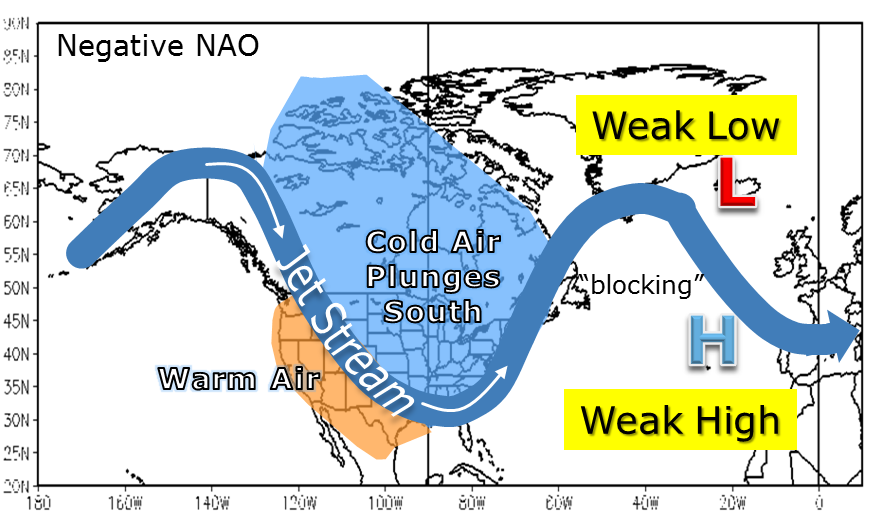
The State Climate office of North Carolina published a blog article today which describes some global patterns that can affect winter weather. In the past, we’ve looked at the impacts of El Nino and La Nina. But there are other patterns which can also steer climate patterns into colder or warmer patterns that may become especially relevant in years when there is no strong El Nino or La Nina occurring (like this year). This article describes the importance of the North Atlantic Oscillation, the Quasi-Biennial Oscillation, and Siberian snowfall in determining winter climate in the Southeast.