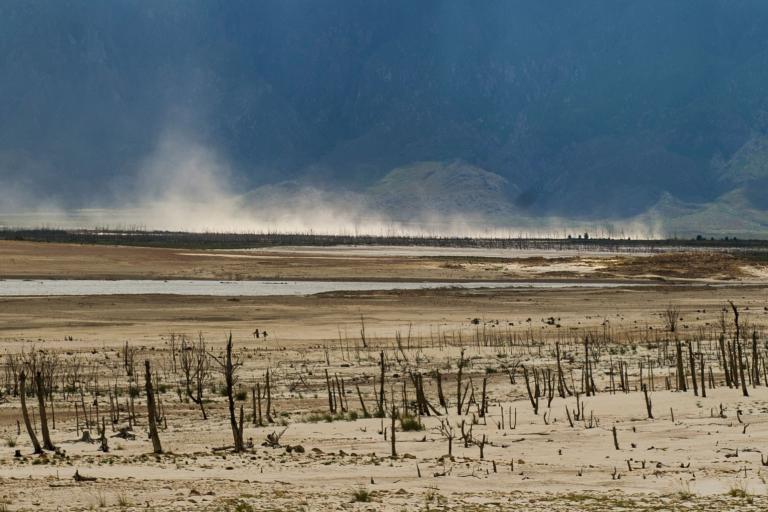
Wildfires propagate by sending sparks downwind, igniting the dry material and spreading the fire. A new study published in Nature Geoscience looks at the propagation of droughts and shows that droughts move by creating rainfall deficits that cause areas of dry soil downwind. That eventually expands the drought as rainfall is suppressed by the lack of moisture. According to this article in Physics Today, “The authors analyzed the largest 40 droughts in recent history. For each event, the authors tracked the air over the drought regions as the drought area expanded. This allowed them to compute how much of the downwind rainfall deficits were caused by the upwind drying of the soils. Their conclusion was that in individual months, up to 30% of the rainfall deficit can be caused by this drought self-propagation.” The authors found that droughts moved in this way most often in subtropical drylands where moisture is already limited.