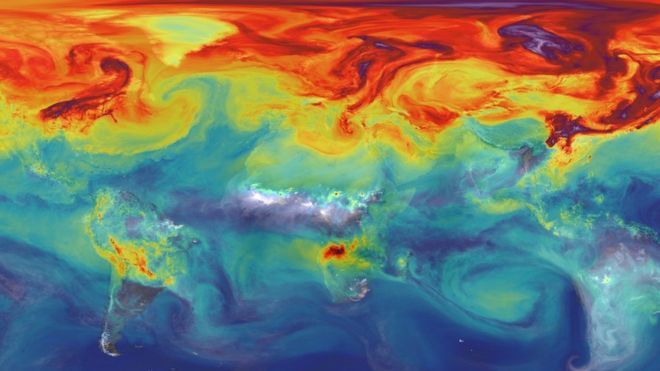
For the first time ever in recorded human history, the level of carbon dioxide for the full year was above 400 parts per million. Proxy data tell us that the last time it was at this level was 3.5 million years ago. This was most likely aided by the strong El Niño, since the droughts induced by the event made it harder for plants to absorb carbon dioxide and forest fires also emitted extra carbon.
Levels of CO2 are expected to continue rising due to the use of fossil fuel as well as some agricultural practices like clearing of land. Since CO2 in the atmosphere helps trap heat near the surface of the earth, temperatures are also expected to continue rising, although the rate of increase depends on how much and how quickly carbon dioxide and other greenhouse gases like methane are emitted. You can read more about the CO2 levels at Weather Underground here and at BBC here.