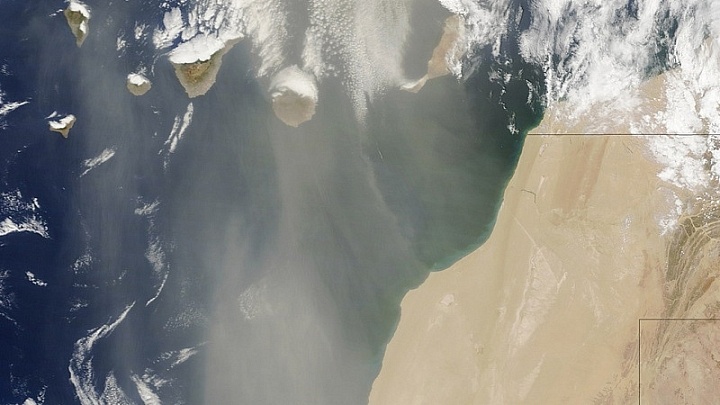
Some new research at the University of Georgia indicates that sands from the Sahara, blown across the Atlantic, can do more than suppress hurricane formation. Researchers there have found that a genus of marine bacteria called Vibrio feed off the Saharan dust, leading to large blooms of the potentially harmful pathogen in ocean surface water. Vibrio in seafood is the cause of a number of related food poisoning diseases; in the U.S., Vibrio causes an estimated 80,000 illnesses and 100 deaths every year, according to the Centers for Disease Control and Prevention. You can read more about this at https://ugaresearch.uga.edu/2016/10/25/blowing-in-the-wind/.
Pests and pathogens are also expected to increase due to the flooding from Hurricane Matthew in parts of the Southeast. You can read more about that in Growing Georgia here.