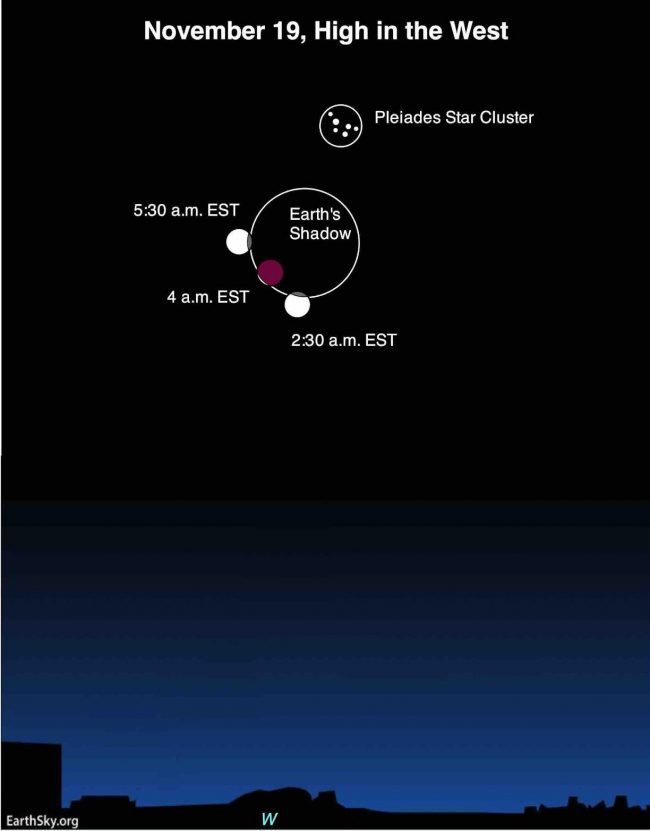
In addition to weather, I am also interested in astronomy and am somewhat excited to note that there will be a nearly total (97%) lunar eclipse on the night of November 18-19 that should be visible across North America. Here in the Southeast, I don’t think we will have many clouds so you should be able to see it. The only bad thing is that it is supposed to start at around 2:30 AM EST and end around 5:30 AM EST with peak darkness at around 4 AM. Not sure I will get up to see it but if my cat wakes me up, I might go out and take a peek.
You can learn more about astronomical events like eclipses, equinoxes, and solstices from EarthSky. I often refer to their posts around the equinoxes and solstices because of their clear explanations of what is going on. They also have sky maps showing where the planets are in the evening and morning sky and the phases of the moon. You can subscribe to their daily email to get news about recent astronomical events.
Another site I like is NASA’s Spot the Station site, which describes where the International Space Station is. You can sign up to get notifications of when it is passing over your area in the morning and evening so you can go and look for it if the sky is clear.