The content on this page is retained only for recordkeeping, historical reference, or research. These materials are preserved in their original form and may not meet current WCAG 2.1 AA accessibility standards.
These archived materials are not required to be remediated. However, we remain committed to equitable access. If you need an accessible version of any archived item to participate in our current programs and services, we will provide one when feasible upon request at caesweb@uga.edu.
This week, The Week posted a story describing how climate is likely to change in Florida in the coming decades based on quotes from a variety of climate scientists and policy-makers. Florida is uniquely placed in the Southeast because of its location as a peninsula jutting out into the area where tropical storms are active. It also has the longest coastline in the Southeast, which makes it especially vulnerable to sea level increases. At the same time, the population is increasing with influxes of people from farther north who may have little experience with either tropical storms or coastal flooding, making it especially risk-prone.
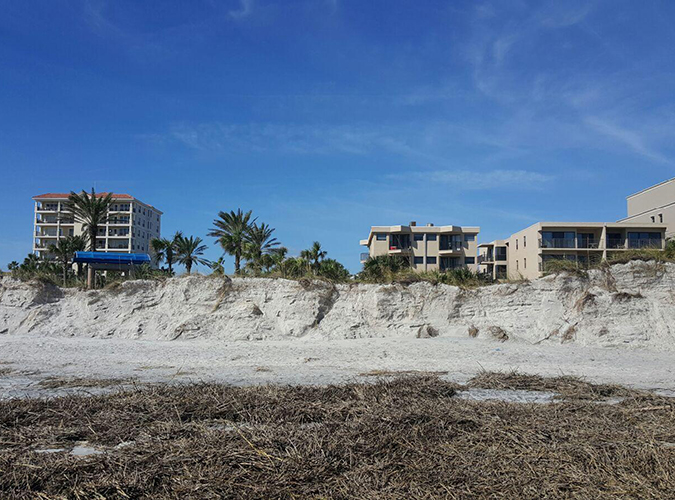
Oct. 14, 2016- The onshore pounding of waves and storm surge from Hurricane Matthew washed away parts of the protective dunes at Jacksonville Beach, Florida. Source: NOAA