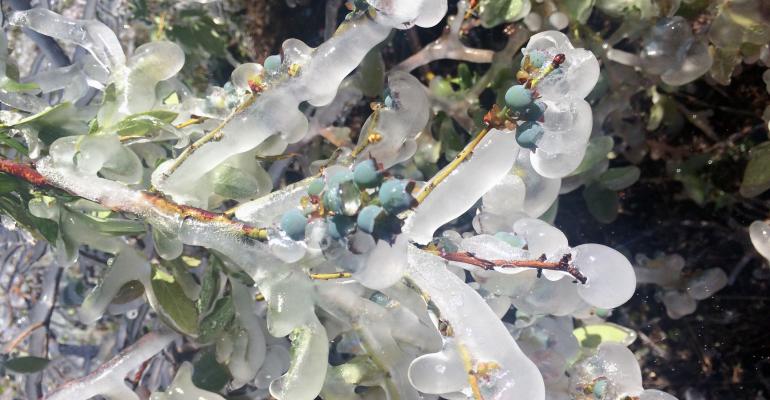
Reports on damage to blueberries and other crops continue to come in from the severe frost of January 30. Fortunately, most of the producers I have talked to in Georgia have told me that the damage was not as severe as expected considering that the temperature got down into the low 20s with a dew point temperature measured over sod of about 8 F. Irrigation of the blueberry bushes built up a lot of ice, and that caused some breakage, but the damage was less than expected and the ice was able to protect a lot of the flowers and immature berries, although some areas did receive more damage than others due to variations in the temperature. While farmers are still assessing losses, I have heard some reports of 20 percent or less from some producers due to higher dew point temperatures in the blueberry fields. This article by Clint Thompson in Specialty Crop Industry shows that growers in Florida were similarly lucky.