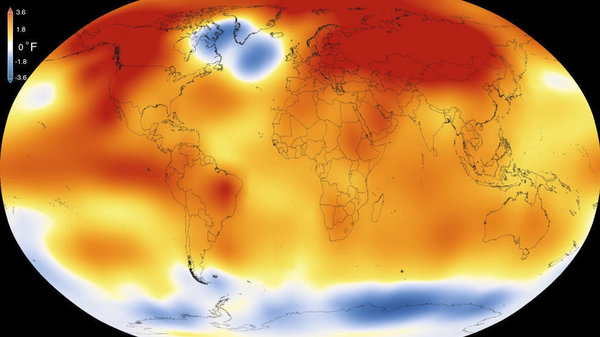
If you’ve been following the monthly summaries of climate that NOAA puts out at the end of each month, it will not be a surprise to you that 2015 has been declared the warmest year on record. Monthly temperatures across the globe have been consistently above normal all year, due in part to contributions from the warm ocean temperatures in the Pacific Ocean both near the equator and more poleward. The warm temperatures were spiked even more at the end by the record-setting warm December which ended the year.
You can read the statistics in the NOAA report at https://www.ncdc.noaa.gov/sotc/summary-info/global/201512 or read National Public Radio’s story on the report here. Because of the continuing El Niño, 2016 is also expected to be near-record, although it is much too early to tell if it will surpass 2015.