It is spring and with that gardening season. If you are growing beans you may want to think about drying and storing some for seed. Every type of seed is a little different and I was interested to see how well a few different varieties of beans stored and then sprouted. So, I did a small stratification trial. I used pinto & navy beans and lentils that were store-bought, and some Asian long beans I had grown the prior year. I did note the best by date on the store-bought beans. I will go over those in the results section.
Materials & Methods
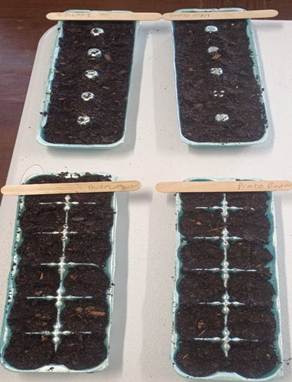
The four types of seed were divided into 3 groups of 10 and 1 group of 12. The groups of 10 seed were wrapped in a single damp paper towel, (moist to the touch but not dripping) the group of 12 were planted in damp topping mix.
Results
As you may know certain seeds require a cold period before they can sprout. The amount of cold varies widely, and for the purpose of this trial I decided to limit this to about 2-3 weeks, which is a reasonable amount of prep time for the average backyard garden. I set up the trial on March 12, 2026. Here I want to note that the 3 store-bought beans had a best by dates. The lentils best by date was March of 2025, pinto was August 2026 and the navy beans July of 2027. Reps 1-3 of each type were placed in the refrigerator at approximately 38F. Rep 4 were planted in the potting mixed and placed under grow lights. All reps were checked on March 17, March 23, and finally on March 30. For reps 1-3 I was looking for seeds that had begun to sprout and for rep 4 I was looking for seedlings that had begun to emerge. In table 1 you can see the full results.
Conclusions
After 18 days I observed that 100% of lentils in reps 1-3 had sprouted, and 50% percent of the lentils in rep 4 had sprouted. In reps 1-3 of all other varieties there was 0 sprouting. Pinto beans and Asian long beans had 0 seed spreads in reps 1-3, but they did have some success in rep 4.
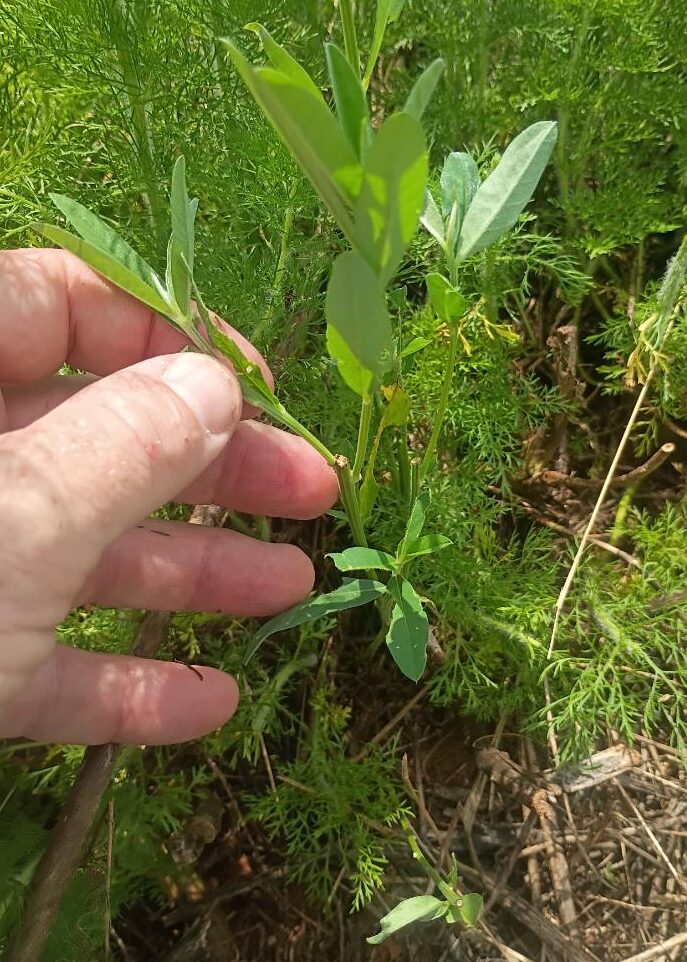
By March 30 the trial produced 5 pinto bean seedlings and 7 long bean seedlings. While this trial is far too small for publication it does suggest that with direct seeding of dried beans a germination rate of approximately 50% can be expected.
The navy beans had 0 on all accounts. Because of the limited size of the trial, I cannot account for the seed failure.
Beans are a great part of any garden. They can produce good yields, and both the pods and the beans can be eaten in most cases. Drying and storing beans doesn’t require any specialized tools. Dried beans should be kept in a cool dry place until they are used.
Table 1
| Best Buy | 12-Mar | 17-Mar | 23-Mar | 30-Mar | |
| 1 Pinto | Aug-26 | 10 | 0 | 0 | 0 |
| 1 Navy | Jul-27 | 10 | 0 | 0 | 0 |
| 1 Lentil | Mar-25 | 10 | 0 | 8 | 10 |
| 1 Asian Long | 10 | 0 | 0 | 0 | |
| 2 Pinto | 10 | 0 | 0 | 0 | |
| 2 Navy | 10 | 0 | 0 | 0 | |
| 2 Lentil | 10 | 0 | 6 | 10 | |
| 2 Asian Long | 10 | 0 | 0 | 0 | |
| 3 Pinto | 10 | 0 | 0 | 0 | |
| 3 Navy | 10 | 0 | 0 | 0 | |
| 3 Lentil | 10 | 0 | 9 | 10 | |
| 3 Asian Long | 10 | 0 | 0 | 0 | |
| 4 Pinto | 12 | 3 | 4 | 5 | |
| 4 Navy | 12 | 0 | 0 | 0 | |
| 4 Lentil | 12 | 2 | 5 | 6 | |
| 4 Asian Long | 12 | 2 | 7 | 7 | |