No, I am not talking about a new sibling. This is something that all vegetable gardeners are going to have to deal with until we can get a handle on it or one of our native species decides they like to snack on it.
It seems like every year we are dealing with another newly introduced pest in agriculture. Many of you have contacted me about lady beetles, brown marmorated stink bugs or kudzu bugs infesting your homes. If you grow bermudagrass for hay, you have dealt with the bermudagrass stem maggot. I’m sure there are several more out there you have heard of, but there is one that is going to hit very close to home for all of us southern gardeners, the cotton Jassid.
I know that none of you are growing cotton in your gardens so why is the cotton Jassid important? It is important because it likes a few things even more than cotton and one of those is okra. The other issue is that these tiny insects reproduce quickly and are very hard to control.
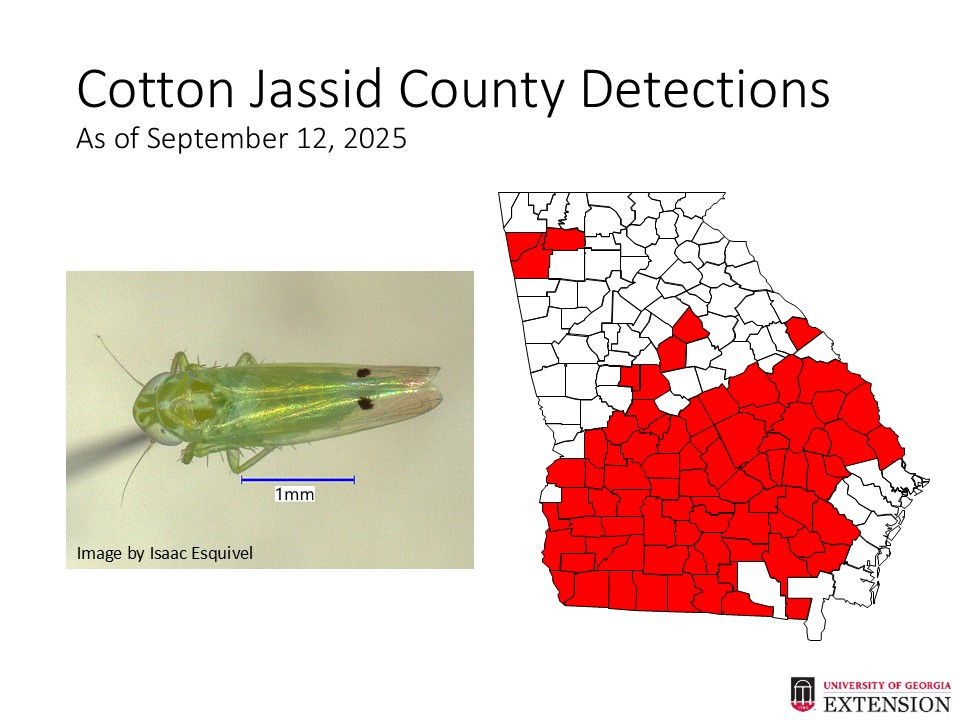
Last year was the first year that we saw this pest in Georgia. It was introduced from India where it made its way to Puerto Rico and then Florida. It was first detected in Seminole County last season and quickly spread across the cotton belt of Georgia and the southeast. This insect damages the plant by feeding on the underside of the leaves and reducing the photosynthetic capacity of the leaves. They can complete their lifecycle in about two weeks which means populations can grow quickly.
The first detection in 2025 was actually in a patch of okra in Seminole County and the worst infestation I saw last season was on okra in Meriwether County. At this time, we do not know a great deal about how and where this pest might overwinter. Hopefully, our cold events this winter knocked populations down or at least further south, so that we don’t see them become a problem until mid to late summer.
At this time we don’t have many good options for homeowners or gardeners. We just need to be very aware and pay attention to both crops and ornamentals in the landscape. Other than okra, it has been found on eggplant, tomato and other vegetables and also certain ornamentals like anything in the hibiscus family. If you spot something unusual contact your County Agent so it can be positively identified. Your County Agent can help with identification and with control or management to hep make sure you have okra to fry or pickle this summer.
