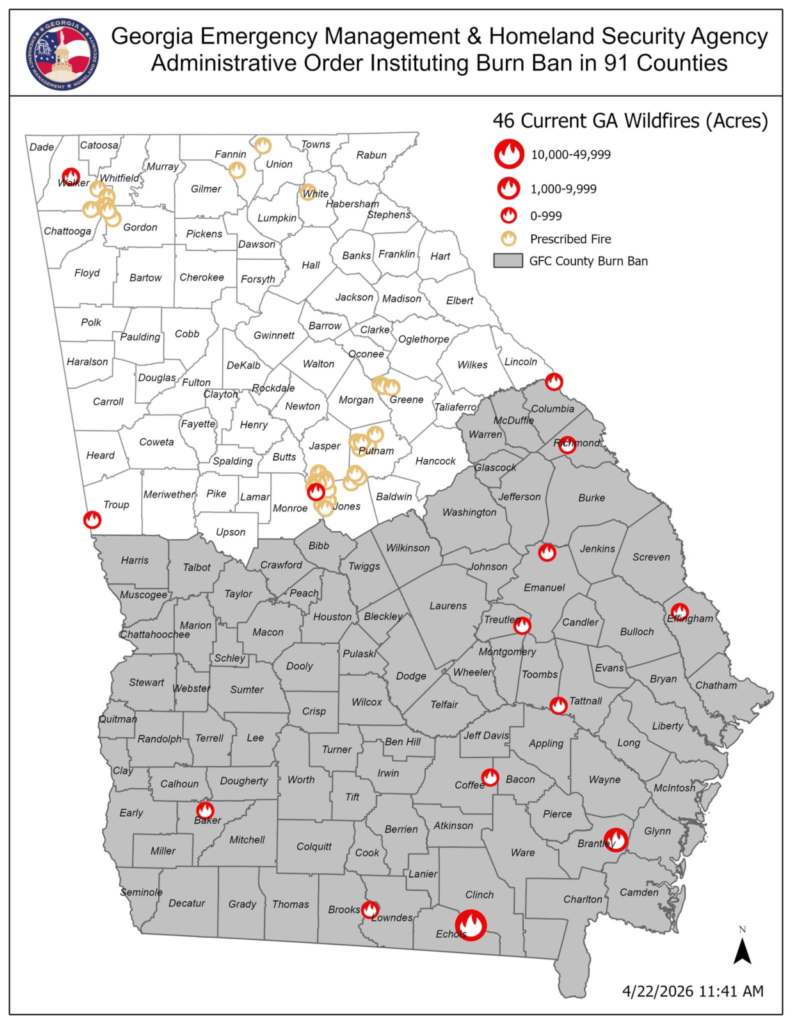
Severe drought conditions across Southeast Georgia are creating dangerous wildfire conditions unlike what we typically see this time of year. Soils are extremely dry, pastures and lawns have turned brown and crunchy, and many ponds, creeks, and rivers are at critically low levels. In some areas, water sources that normally help slow or contain fires are no longer effective.
In response to these conditions and increased wildfire activity, a mandatory outdoor burn ban has been issued by the Georgia Forestry Commission. The order went into effect on April 22, 2026, and applies to 91 counties across South Georgia, including Evans and Candler counties.
Why the Burn Ban Was Issued
Georgia is currently experiencing a combination of dry vegetation, low humidity, warm temperatures, and wind, which creates ideal conditions for wildfires to start and spread rapidly.
According to guidance from the International Association of Fire Chiefs, these conditions are often associated with “Red Flag” fire weather events. These warnings indicate that any spark can quickly lead to a fast moving wildfire due to dry fuels and weather conditions.
In addition, firefighting resources are currently stretched thin, with many firefighters and Georgia Forestry personnel deployed to active wildfires in other parts of the state. This reduces local response capacity and increases the importance of preventing new fires from starting.
What the Burn Ban Includes
Under the administrative order, the following activities are prohibited:
- Prescribed burning
- Burning of yard debris such as leaves and limbs
- Agricultural burning
- Any other outdoor burning of combustible materials
The order carries the force of law and applies to all individuals, landowners, and agricultural operations within affected counties.
Consequences for Violating the Burn Ban
Violating the burn ban can result in serious consequences:
- Fines that may range from hundreds to thousands of dollars
- Possible misdemeanor charges
- Liability for wildfire suppression costs and property damage
- Potential felony charges if a fire causes significant damage or endangers lives
With current conditions, a single escaped fire can quickly become a large wildfire.
Fire Risk is Higher Than Normal
Guidance from the International Association of Fire Chiefs emphasizes that during high fire danger conditions:
- Fires ignite more easily
- Fires burn hotter and spread faster
- Wind can carry embers long distances, starting new fires ahead of the main fire
- Even ash or debris can reignite days later
This is why restrictions like burn bans are necessary during drought conditions.
Use Extreme Caution with Everyday Activities
Even routine activities can start a wildfire under current conditions. Residents should use extreme caution when:
- Grilling outdoors, especially near dry grass or vegetation
- Camping fires or any open flames outdoors
- Fireworks or other pyrotechnic devices
- Welding or using cutting torches
- Operating equipment that can produce sparks
- Driving equipment or vehicles through dry grass or brush
- Parking vehicles or equipment with hot exhaust systems on dry grass
- Using chainsaws or metal tools that may create sparks
Dry vegetation can ignite easily, and heat from equipment, open flames, or small sparks can quickly lead to a fast spreading fire. Taking extra precautions with these activities can help prevent accidental wildfires during this critical period.
What Residents Should Do Right Now
Residents are encouraged to:
- Avoid any activity that could create sparks or flames
- Use caution with equipment in dry vegetation
- Never discard cigarettes outdoors
- Avoid parking vehicles in dry grass
- Report any wildfire immediately
Duration of the Burn Ban
The burn ban is expected to remain in place for approximately 30 days unless conditions improve or additional restrictions are necessary.
Final Thoughts
Current drought conditions across South Georgia have significantly increased wildfire risk. This includes local impacts such as extremely dry soils, low pond and creek levels, and stressed vegetation, all of which contribute to dangerous fire conditions.
With reduced firefighting capacity and elevated wildfire risk, preventing new fires is more important than ever. Avoiding outdoor burning and minimizing fire risk activities now can help protect lives, property, and natural resources.
Learn More
Burn Ban Order – https://gatrees.org/wp-content/uploads/2026/04/Administrative-Order_Burn-Ban.pdf
Red Flag Wildfire Warnings – https://www.wildlandfirersg.org/s/iafc2/red-flag-warning-resource-MCC72WHRNFPRHXTHAVYV6EE4POMQ?language=en_US
