Herbal tea is made from steeping like dried herbs, flowers, and spices in water. Traditional tea, like black tea or green tea, is made from the leaves of Camellia sinensis and is caffeinated, unlike most herbal tea ingredients.
Many popular ingredients used in herbal tea blends can be grown in home gardens in Georgia. These plants often serve two purposes: they add beauty to your landscape and can be harvested for tea. Once dried, they store well for long periods and can be used throughout the year. Herbal teas can aid in relaxation and can help you develop healthy night time routines. I personally use them to unwind before bed or help with digestion after meals.
Some herbal tea ingredients that can be successfully grown in home gardens in Georgia are:
Lemongrass (Cymbopogon citratus)- This tropical plant thrives in hot humid Georgia summers. This grass grows full and tall and has a bright yellow-green color. It has lemony scent and flavor as the name implies. Lemongrass is grown for its stalk which is used in tea and to flavor curries and soups. To harvest, cut the plant at the base and remove the tough outer layers to reveal the more tender, flavorful inner portion.

Photo by Forest and Kim Starr (CC BY 2.0)

Photo by Forest and Kim Starr ( CC BY 2.0)
Ginger (Zingiber officinale) – Another tropical plant, this is can also used as a beautiful landscape addition and has many culinary uses across cultures. Ginger is great in tea to aid in digestion. Ginger is grown by vegetative propagation of rhizomes which are also the part of the plant harvested at the end of the season. The foliage is a bonus and adds a tropical look as a summer annual in Georgia landscapes. In early spring, pieces of ginger with “eyes” or growing points can be planted in rich loamy soil. Like other tropical plants, it prefers hot humid weather.
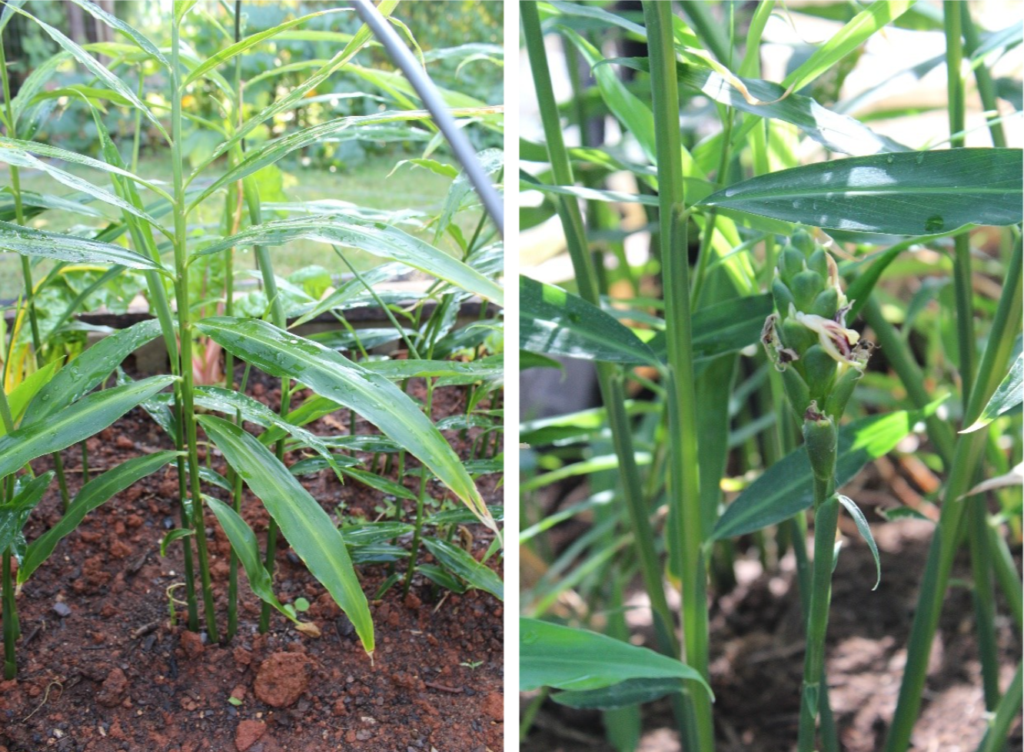
Photo by Wisconsin Horticulture, Division of Extension

Photo by Wisconsin Horticulture, Division of Extension
Chamomile (Matricaria chamomilla)-Chamomile is a low growing aromatic herb with frilly leaves and small white flowers with yellow center disk. It thrives in full sun and well-draining soil, making it a great choice for rock gardens. However, it can struggle in Georgia’s heavy clay soils, so growing it in containers may be a better option. Chamomile is heat tolerant and self sows so you don’t have to replant year after year. The herb is commonly used as a sleep aid and is included in sleepy time tea blends due to it’s calming effects. It is great for a nighttime routine.

Photo by SantiMB Photos ( CC BY-NC-ND 2.0)

Photo by Bart Busschots (CC BY-NC-ND 2.0)
Tulsi (Ocimum tenuiflorum )- Tulsi, also known as “holy basil,” is related to culinary basil. It is very fragrant and loved by pollinators because of its tall flower spikes full of purple flowers. It is a full sun plant that is low maintenance and grows easily in Georgia. Tulsi is often used in tea blends to help manage stress.
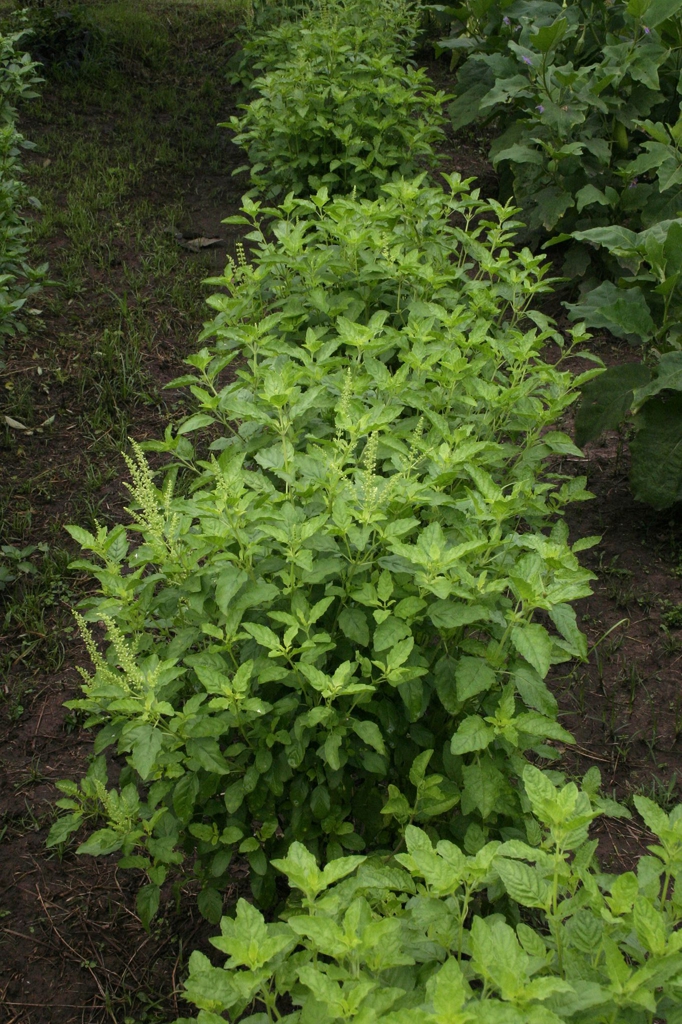
Photo by Andres Bertens ( CC BY-NC-SA 2.0)

Photo by Cathy DeWitt ( CC BY-NC 4.0)
Roselle (Hibiscus sabdariffa)- Another plant that thrives in hot Georgia summers, this relative of okra gets quite large and has gorgeous large pinkish-white blooms. The part of the plant that is harvested for tea is the calyx. This is the structure left behind after the flowers fade and is an inner rigid leaf-like structure. It has a cranberry- like tart flavor and a deep red color when brewed. Plan for roselle to grow quite large, it becomes woody and can grow up to 7 feet tall and a 3 to 4 feet wide.

Photo by Josh Fuder, UGA Extension.
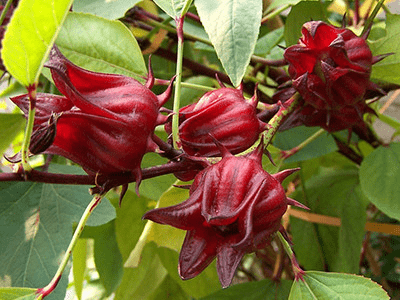
Photo by Roy Cui (CC BY-NC-SA 2.0).
Butterfly Pea (Clitoria ternatea)- Butterfly pea is a fun plant to experiment with because of its unique ability to change color. The tea it produces is naturally purple, but when the pH is lowered—by adding something acidic like lemon juice—it changes to a vibrant pink. The plant is a flowering vine that can grow up to 15 feet long. It’s bright blue blooms resemble those of other pea plants, making it both an eye-catching ornamental and an interesting addition to herbal teas.

Photo by IFAS Extension.
The Dekalb County Extension office is hosting an herbal tea class Monday, March 30th from 6:00 PM to 7:00 PM where we will discuss more plants that can be grown for herbal tea, how to harvest and process them and incorporate them into a healthy sleep routine. Participants will take home a strainer and a local tea blend to enjoy at home.
Register online at https://tinyurl.com/225spkzu, registration is required. There is a $5 registration fee. Registration ends at 12:00 PM March 30th.


Leave a Reply