We were excited to hold our potato container gardening class on St. Patrick’s day at our newly renovated DeKalb County Extension office! We couldn’t think of a better way to celebrate the day than by growing potatoes. Although there’s endless information on how to grow them in ground or a raised bed, we wanted to share an alternative method for those who may not have the yard space: growing potatoes in a container, or in the case of this class, a trash can. Since this activity felt like too much fun to keep confined to the classroom, we wanted to provide a tutorial explaining how it was done.
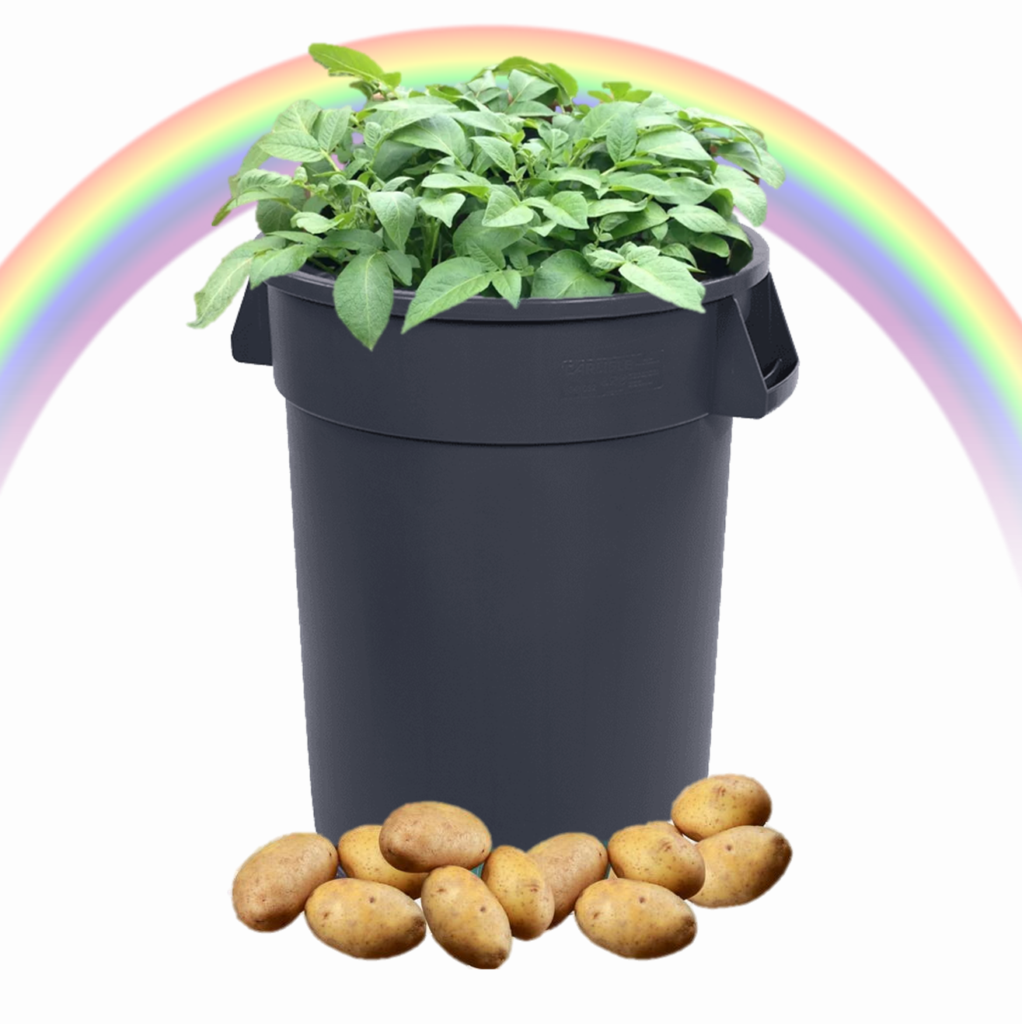
Supplies needed include:
- Certified Seed Potatoes
- 10-15 gallon container
- Potting mix
- Compost
- Fertilizer (we used 10-10-10)
- Straw or mulch
What are Seed Potatoes?
Not just any potato can be used for growing. Most store-bought potatoes are treated with some form of growth inhibitor, reducing the rate of germination. Although certain potatoes from the store may start to sprout when left in your cupboard for too long, they have a low success rate when planted and often result in a lower yield, if any. Certified seed potatoes produced specifically for growing are commonly found at garden stores. Despite the name, they’re not actually seeds but rather small potatoes produced specifically for growing new plants.
Potatoes contain small, dimpled spots, called eyes, that produce shoots. You may be able to see new shoots forming on your seed potatoes before planting. Each planted potato should contain at least two eyes. If potatoes have multiple eyes (which they likely do), they can be divided with a knife into different pieces. This cutting should be done 24-48 hours before plating to give the potato time to “scab over.” This gives the potato a chance to form a protective layer before being placed in the soil and exposing it to countless microbes that may make it rot.

The Container
When choosing a container, there are two main factors to consider: size and drainage. Soilborne pathogens, like Phytophthora infestans (the causal agent of the Irish potato famine), thrive under cool, wet conditions. Waterlogged soil resulting from inadequate drainage provides the perfect environment for these diseases to develop.
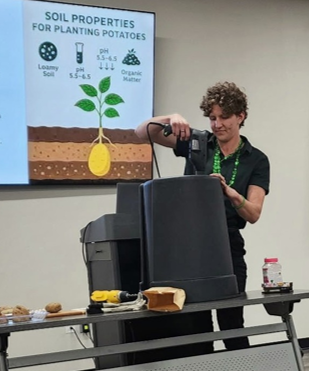
A 10-15 gallon container about 2-3 feet tall is ideal for potatoes. Although potatoes can grow in containers larger than this, increasing the height can create issues with drainage. Grow bags and large pots are available at most garden stores. However, other containers such as plastic bins or garbage cans, are also viable options as long as proper drainage holes are created on the bottom. In our workshop, we opted for a trash can to demonstrate the numerous, creative options available.
Soil & Planting
When grown in-ground, potatoes thrive in sandy loam soil rich in organic matter. However, soil types commonly used in garden beds can easily become compacted in containers. Potting mixes are lightweight substrates made of either peat moss, coconut coir, wood fiber, or other materials designed for optimum moisture retention in containers. We chose to use soilless potting mix as our primary growing medium, mixed with compost to increase richness.
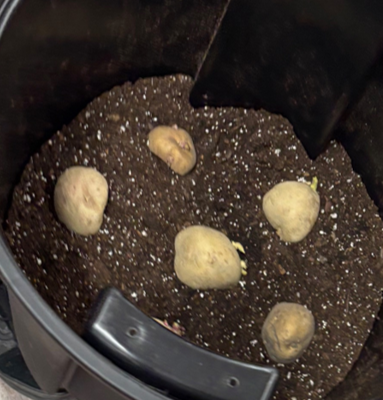
After filling our trash can about 4-6 inches, we placed our potatoes (facing eye-side-up) on top and covered them with another 4-5 inches of substrate. Finally, a layer of straw was placed on top. As the potatoes grow, they will need to be covered with more soil. Your potatoes may need to be fertilized about halfway through the season and a few weeks before harvesting.
Common Questions
What about sweet potatoes?
Although related, sweet potatoes are a different species and have different growing and planting requirements. New plants can be grown from pieces of regular potatoes. Sweet potatoes are grown from rooted shoots of a mature plant known as “slips.” If the whole sweet potato tuber is grown following the same process as regular potatoes, it may grow vines but not new potatoes.
How do I sign up for more amazing classes like this?
The goal of Extension is to connect research based information with communities and translate that information for the public. One way we do that is by conducting programs with the goal of educating its participants. Extension offices often tailor their events to the needs of the county. In DeKalb, many of our agriculture and natural resource classes focus on teaching individuals how to grow food with limited space, increasing community exposure to the outdoors and the environment, and other activities related to urban agriculture. Some upcoming events include learning how to grow herbs in containers (and cook with them), save seeds harvested from the vegetables you grow in your yard, grow and process your own tea, and recycle plastic containers to grow plants. You can find more information about them, as well as future programs, using the links below.
View our currently available events
Sign up for our monthly newsletter to stay up to date on our current classes and workshops
Sources & Additional Information
Home Garden Potatoes by Bob Westerfield and Caley Anderson, University of Georgia
What is the best way to grow potatoes in containers? by University of New Hampshire Yard and Garden Infoline
Growing Potatoes in Containers by Candice Anderson, Illinois Extension
Easy Container Vegetables And How to Grow Them by Emoni Burgess, NC Cooperative Extension


Leave a Reply