It’s that time of the year when the extension office starts receiving calls about fall armyworms in lawns. They can be identified by their dark head with a white inverted “Y” between their eyes. They get their name from their movement across a lawn in large numbers, like an army, usually in the early morning or late evening.
These caterpillars of the fall armyworm moth arrive in Georgia almost every year and can cause significant damage to turfgrass. They are native to North America but are unable to overwinter in Georgia. They are dispersed from Florida and South Texas to our state by weather fronts and usually arrive in spring or early summer. However, we don’t typically notice them in turfgrass until July. Once they are here, their populations quickly increase as we go through the summer and fall, as they go through 2-3 generations. They will die in the freezing conditions of winter.

The moths are active at night when they mate and lay their white, fuzzy-looking egg masses. Each egg mass contains 50-200 eggs and can be found on structures or plants near lawns. Once they hatch they must feed on turfgrass within a few hours. They will stay in the grass and feed on grass blades mostly at night. As they mature, they start to feed aggressively at all times of the day. After 2-3 weeks, the fifth-stage caterpillars will drop from the blades and dig into the soil where they become pupae. They will stay in the soil as pupae for just over a week before emerging as a moth. After a week, these new moths will lay eggs and the cycle begins again. This generation can occur within four weeks in Georgia summers.

The early stages of the caterpillar are so small it is difficult to tell if a lawn is infested. But as they develop into third-, fourth-, and fifth-stage fall armyworms, the damage becomes visible. The turfgrass will gradually turn brown, resembling disease or drought conditions.
They tend to do less damage on healthy turfgrass than on already unhealthy grass. Good cultural practices of proper fertilization, regular mowing, and irrigation will help grow healthy turfgrass, helping protect and recover from fall armyworm damage.
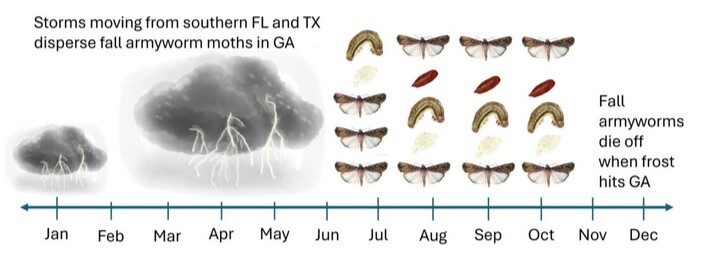
Varying weather conditions from year to year can affect the severity and timing of fall armyworm infestations, so monitoring for egg masses is an important tool for controlling these pests. Check for egg masses on any structures near turfgrass between July and September. Treat with recommended insecticides. The other thing to look out for is any signs of feeding damage. This is usually present in the areas around the structure where the eggs were laid. Slowly pour soapy water into a healthy section of grass next to the brown patch of turfgrass. If fall armyworm caterpillars are present, they will wriggle out from the grass within 10 minutes. If they are present, treat them immediately with insecticides recommended by your local extension office.
For more information check out these publications: https://site.caes.uga.edu/entomologyresearch/2024/08/fall-armyworm-in-georgia-biology-and-management-in-turfgrass/, https://www.aces.edu/blog/topics/lawn-garden/controlling-fall-armyworms-on-lawns-and-turf/

Leave a Reply