A website from UGA Cooperative Extension

2026 Watermelon Spray Guide

From Dr. Bhabesh Dutta – UGA Extension Vegetable Pathologist. This condensed spray guide picks up at “Fruit Set” (spray 5) – or the post chlorothalonil sprays. if you want sprays 1 – 5, I will send to you or you can refer to a PREVIOUS BLOG POST from 4/1/26. Call with questions. Tucker Price 229-507-8862.

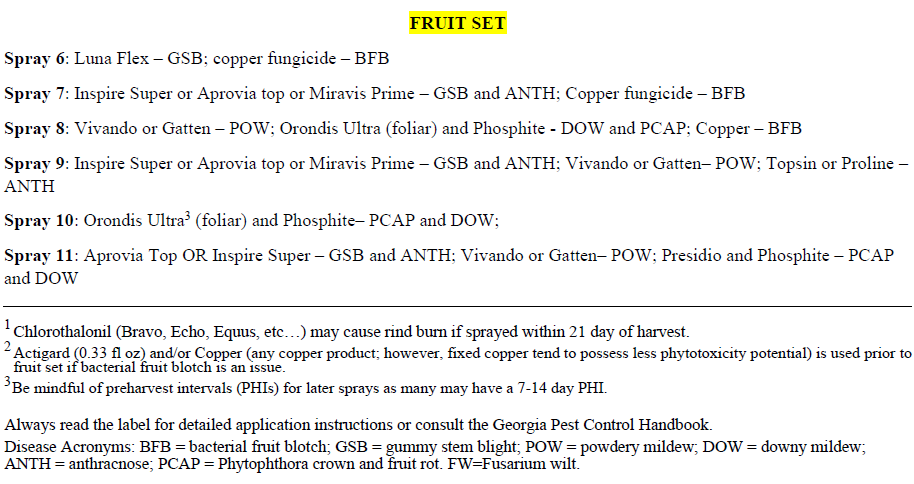
Example of watermelon fungicide spray guide.

Watermelon Disease/Wildlife Damage Images:

Here are some pics of some potential watermelon disease and wildlife damage symptoms to be aware of when scouting fields and what to suspect.
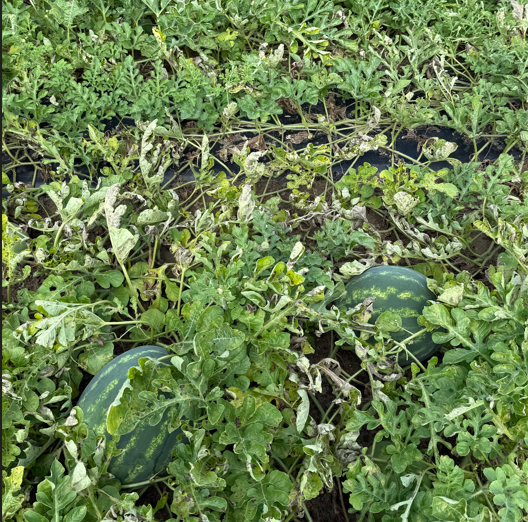
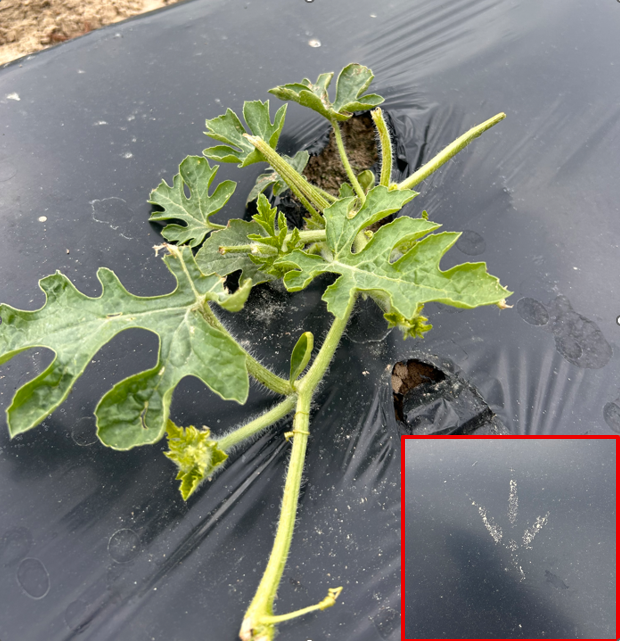
Image showing watermelon downy mildew symptoms.
Downy Mildew. Leaves will “curl over” and have spots similar to gummy stem blight but without the concentric rings.
Image showing suspect deer damage in watermelon.
Deer damage. Possibly turkey? Notice turkey track (in addition to deer) on plastic found near this damaged plant.
Fusarium wilt in watermelon.
Fusarium Wilt – single dead or wilted runner. Other things to consider are squash bugs, mechanical damage (deer stepped on it), wind damage.
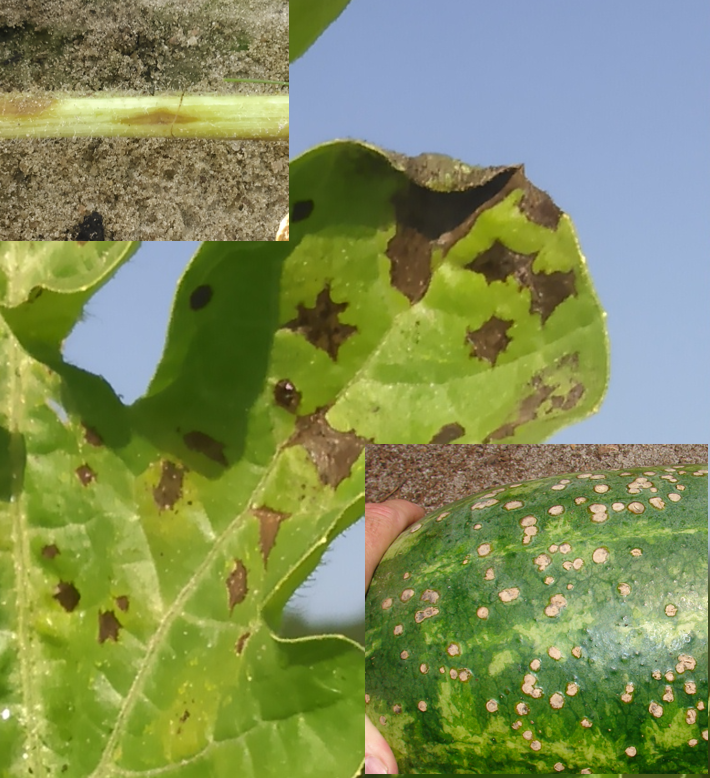
Image showing watermelon anthracnose symptoms.
Anthracnose – Diamond shaped lesions on stems, angular or delta shaped leaf spots that will often crack, round faded pink colored lesions on melons.
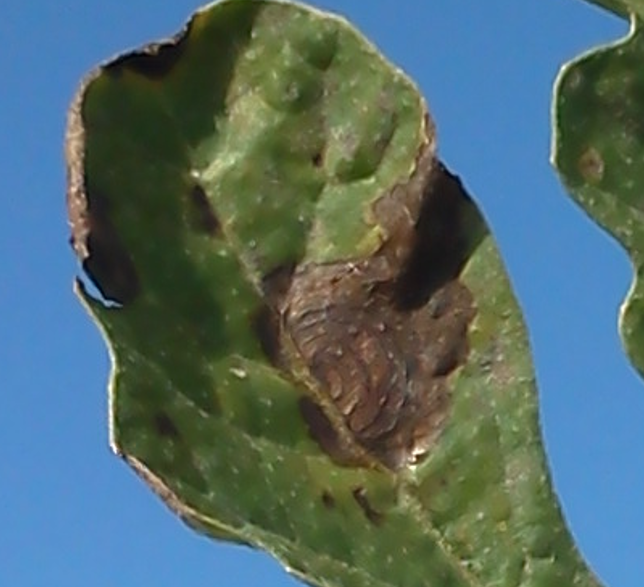
Image showing watermelon gummy stem blight symptoms.
Gummy stem blight – lesions on leaves with concentric rings. Fertilizer burn can look similar. Spots often cross leaf veins and typically start from leaf margins.
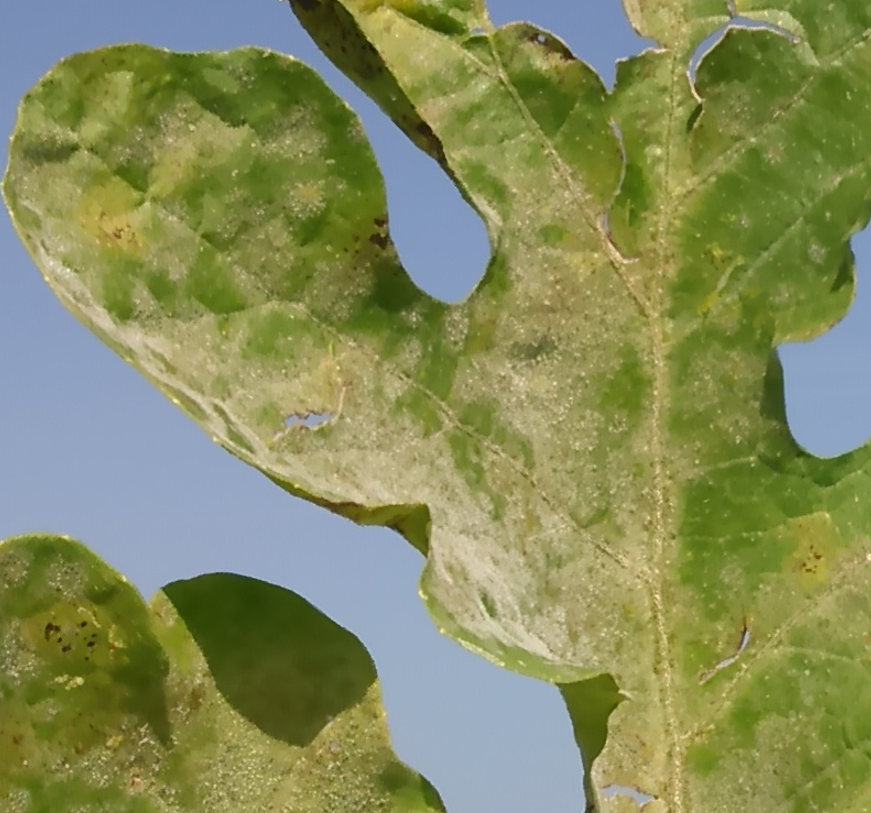
Image showing watermelon powdery mildew symptoms.
Powdery mildew.

3- Sisters Gardening

One of 5 raised bed gardens planted by Cook 4-H’ers beside Cook Extension Office this year. “3 Sisters” is a companion style planting practiced by Native Americans that include corn, beans, and pumpkin (or other cucurbit).
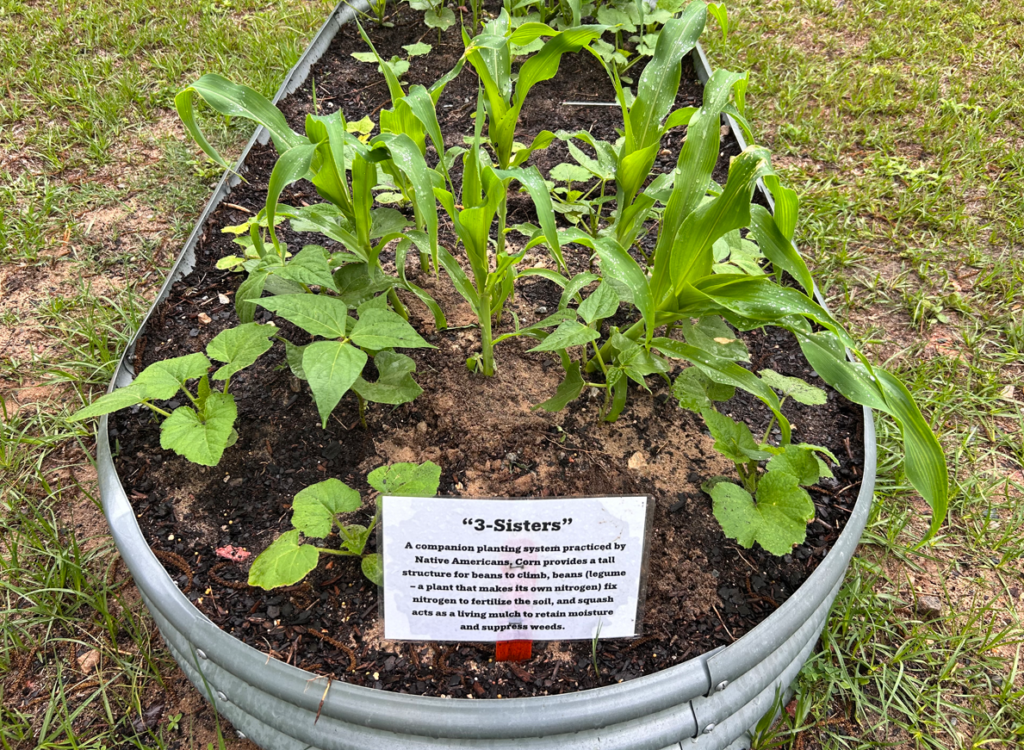
Image showing 4-H garden and companion planting with corn, squash and beans.
Posted in: