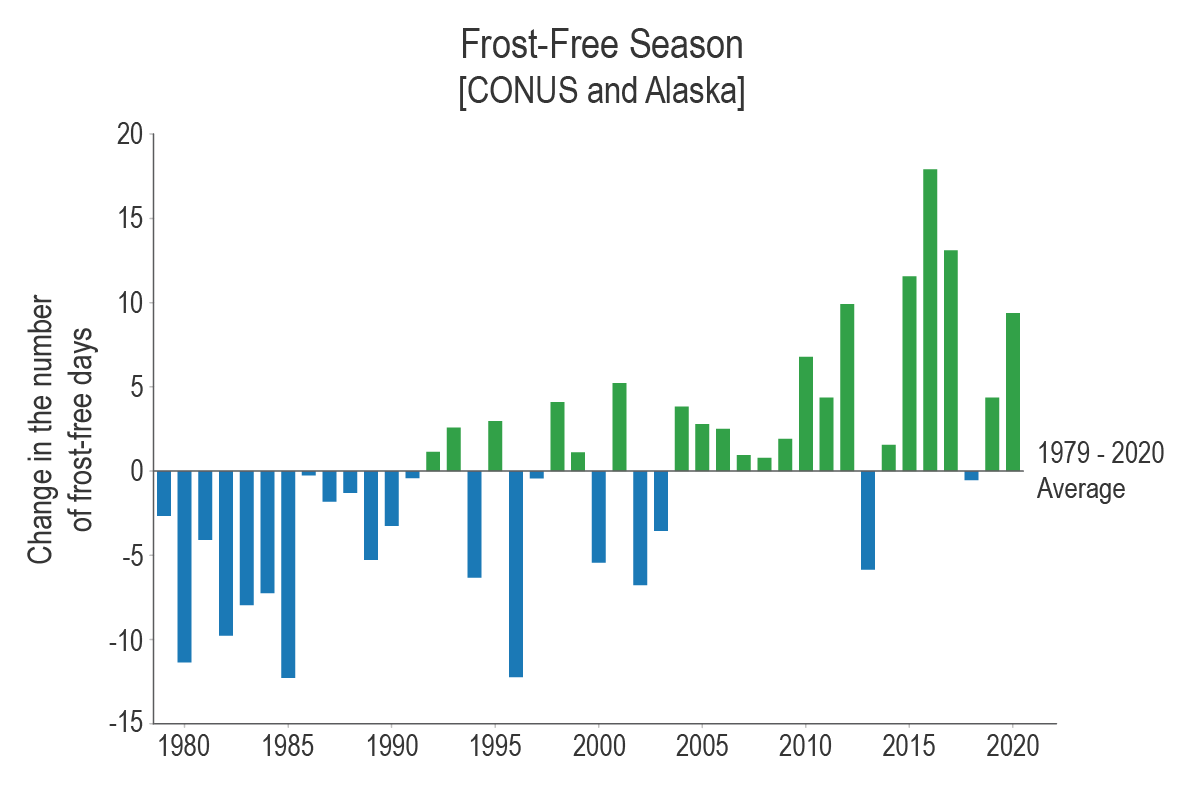
Indicators are observations or calculations that can be used to track conditions and trends. Indicators related to climate—which may be physical, ecological, or societal—can be used to understand how environmental conditions are changing, assess risks and vulnerabilities, and help inform resiliency and planning for climate impacts. The indicators listed include temperature, heating and cooling degree days, start of spring, heat waves, and others related to aspects of climate, many of which are things that affect agriculture. At this website, https://www.globalchange.gov/browse/indicators/catalog, they are all national or global indicators, so could not be used to look at individual states or locations.