Table of Contents
Protecting Ground-Nesting Bees in Urban Landscapes
UGA Extension contacts: Zia Valerie Williamson and Shimat V. Joseph
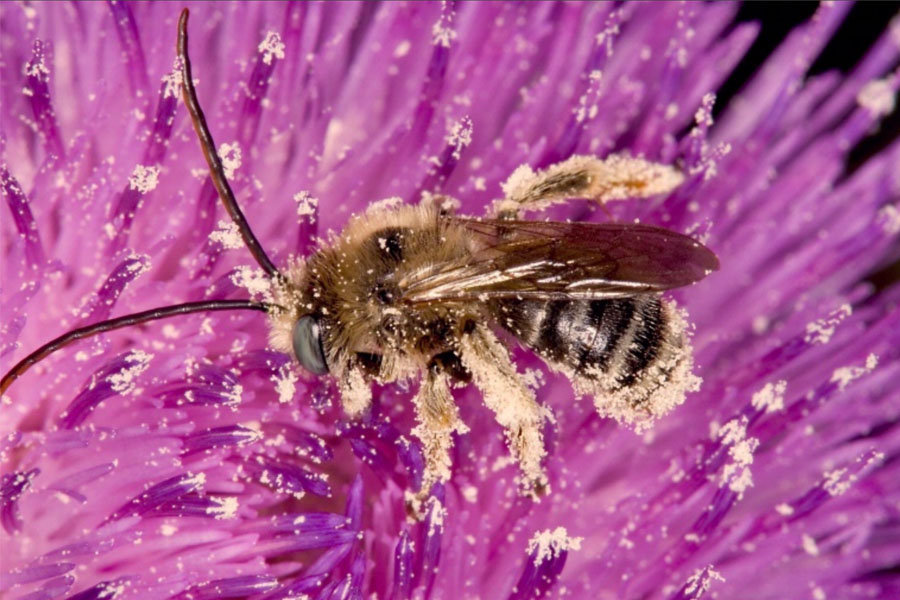
A Ground-Nesting Bee in the Family Melissodes.
Photo credit: David Cappaert, Bugwood.org.
Over 50% of the world’s population currently resides in urban areas, which continue to expand. Bees are among the most populous, diverse, and effective pollinators. Approximately 70% of bee species nest in the ground, spending their larval and pupal stages underground (Figure 1). Continued urbanization threatens natural spaces, as land degradation, pollution, and habitat destruction present serious challenges to sustaining bee populations.
A Yankee Learns to Garden in SE Coastal Georgia
Written by: Mary Helan Turner, Glynn Co Master Gardener
Invasive Species: Camphortree (Camphora officinarum)

Invasive broad-leaved evergreen tree, grows up to 100 ft tall
Leaves are alternate, shiny, dark green above and lighter green below, and have wavy margins
Flowers in spring and are small white to cream colored
Fruit is a black, pea-sized berry on a stem in small groups
Photo Credit: Rebekah D. Wallace, University of Georgia, Bugwood.org
Alternatative native is the Black Cherry which is a deciduous tree
The University of Georgia College of Agricultural and Environmental Sciences (working cooperatively with Fort Valley State University, the U.S. Department of Agriculture, and the counties of Georgia) offers its educational programs, assistance, and materials to all people without regard to age, color, disability, genetic information, national origin, race, religion, sex, or veteran status, and is an Equal Opportunity Institution.